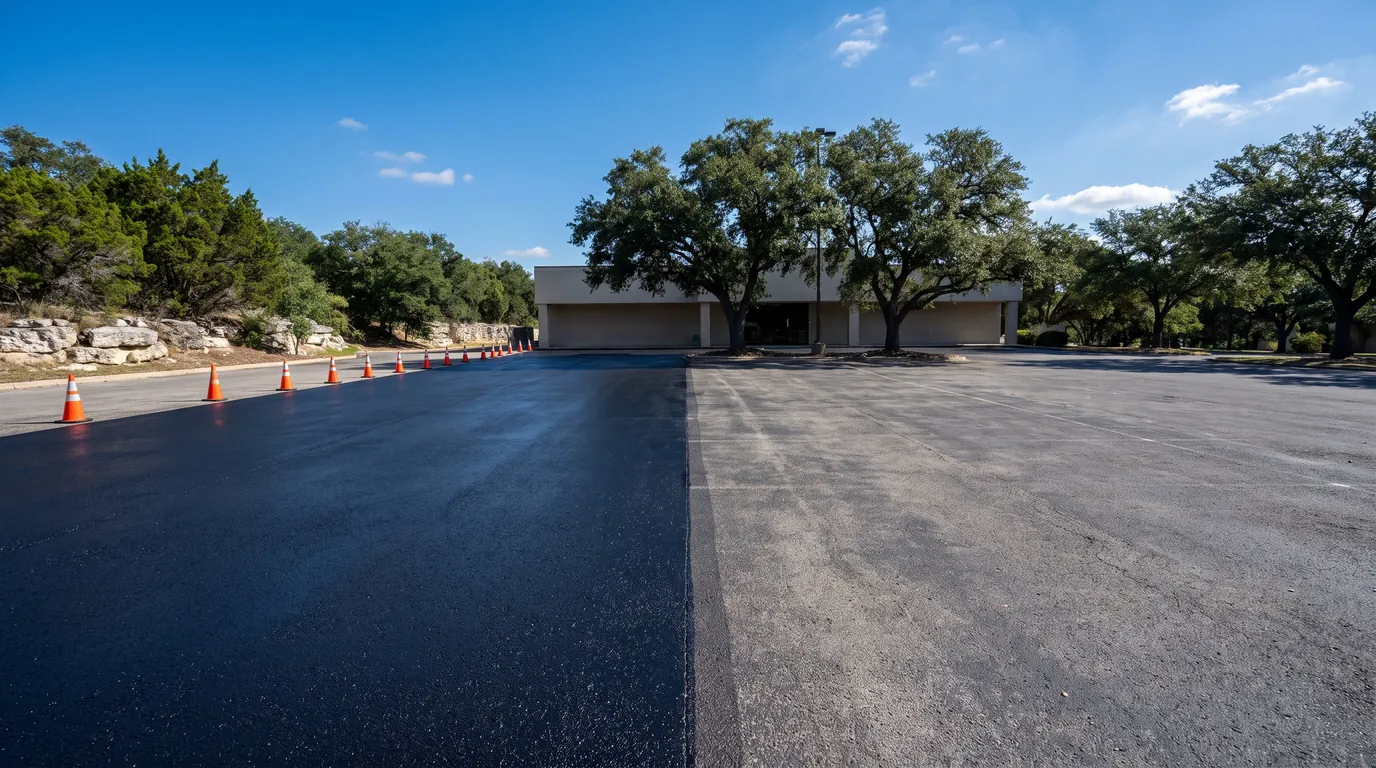
Central Texas sun dries asphalt out and turns it gray and brittle. We fill the cracks first, then apply a thin coat of sealcoat to the surface. Sealcoat doesn’t add strength to the asphalt or fix a failed base beneath it.
What sealcoat does
Sealcoat is a liquid coating we spread or spray over the asphalt. It slows the sun’s drying of the binder that holds the stone together and helps keep water out of small surface cracks. It also resists oil and gasoline drips. The coating leaves the surface dark and even.
Crack sealing comes first
Sealcoat alone doesn’t close cracks, so water still gets in through them after the surface is coated. Before we sealcoat, we clean the cracks out and fill them with hot-applied crack sealant. Wide cracks or areas with web-pattern cracking need patching, a type of asphalt repair.
How often to sealcoat
We wait about six months before the first sealcoat on new asphalt so it has time to cure. After that, we usually suggest sealcoating every two to three years, though lots in full sun with heavy traffic may need it sooner. You’ll know it’s due when the surface turns gray and loose stone starts showing.
The sealer we use
We use asphalt-emulsion sealcoat. The City of Austin bans coal-tar pavement sealants inside its planning jurisdiction, and we don’t use them anywhere.
Driveways and parking lots
For driveways, we edge along the lawn and beds to keep sealer on the asphalt, and we protect the garage door and walkways. You’ll need to keep cars off the driveway until it dries, and we’ll tell you how long that takes.
For parking lots, we sealcoat in sections so part of the lot stays open. We handle parking lot striping after sealcoating because the sealer covers the old lines.
What sealcoating costs
Angi’s driveway sealing cost guide, updated May 2026, puts sealing an asphalt driveway at $1.25 to $1.50 per square foot for materials and labor. You’ll find crack filling and other published figures in the cost guide.