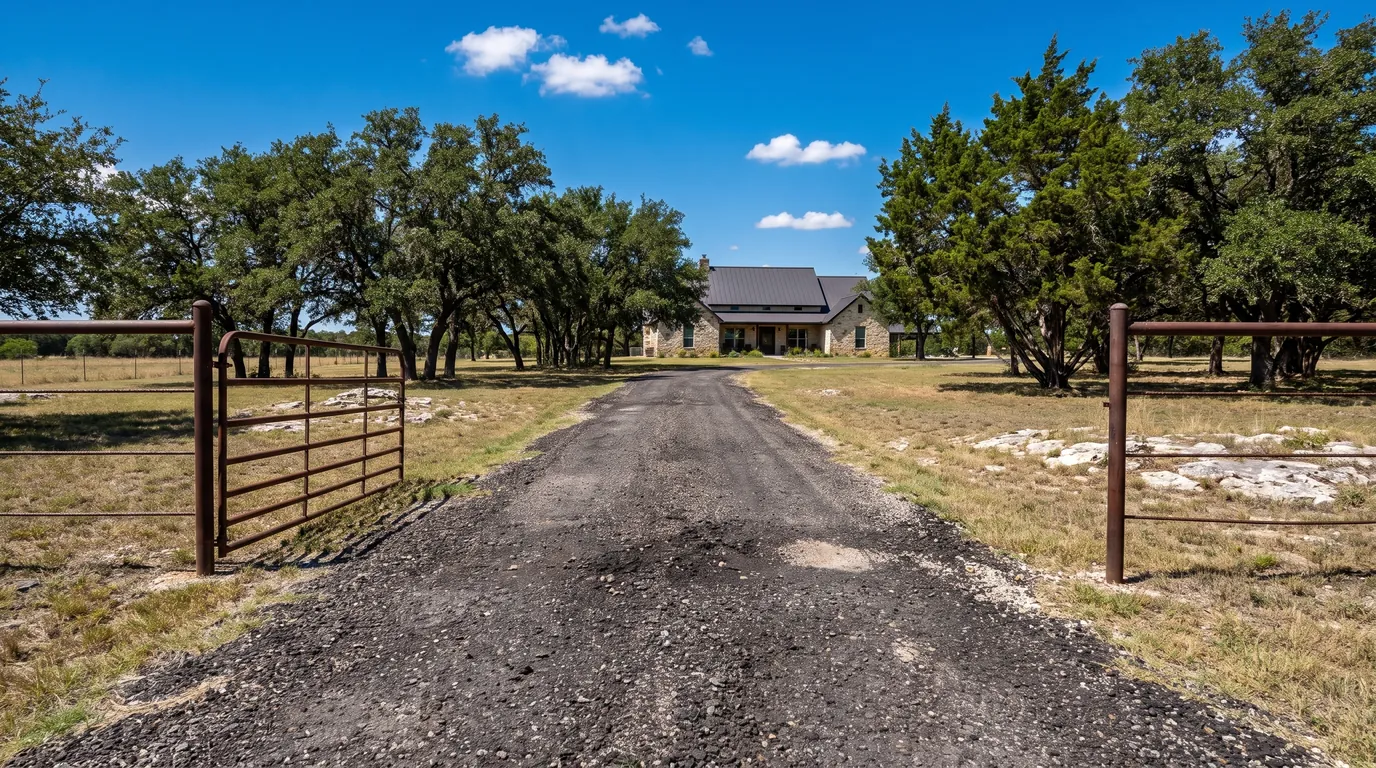
People ask about millings when a long gravel drive gets dusty or muddy and hot-mix asphalt costs more than they want to spend. We pave hot-mix asphalt and chip seal at National Asphalt Paving, and a millings drive is another option worth knowing about. Federal Highway Administration guidance and figures from published cost guides help you weigh that option.
What millings are
The Federal Highway Administration (FHWA) defines reclaimed asphalt pavement (RAP) as removed or reprocessed pavement containing asphalt and aggregates. It’s generated when roads are removed for reconstruction, resurfacing, or utility access. FHWA says milling machines can remove up to 2 inches of pavement in a single pass. RAP typically contains 3 to 7 percent asphalt cement, the binder, by weight, and FHWA says RAP quality varies because it comes from many old roads.
How a millings driveway is built
The Federal Highway Administration (FHWA) lists residential driveways and parking areas among the places reclaimed asphalt pavement (RAP) can be used in the base or subbase, the supporting layers beneath the driving surface. FHWA stresses thorough compaction because the material can settle later if it isn’t compacted well. It also reports that compaction goes better with little or no water.
HomeGuide (December 2025) calls for a 4-inch minimum layer on residential driveways. Angi (September 2026) says a millings driveway should be compacted with a roller, and contractors may advise you to stay off it for up to a week.
What millings cost
HomeGuide (December 2025) puts millings material at $10 to $20 per ton or $12 to $32 per cubic yard, says one ton covers about 60 square feet at 4 inches, and lists an installed range of $2 to $5 per square foot. Angi (September 2026) gives ranges of $10 to $20 per ton for material and $3 to $8 per square foot for a project. Angi’s pros and cons page (July 2026) lists $2 to $5 per square foot for millings and $7 to $13 per square foot for traditional asphalt.
| Published figure | Source | |
|---|---|---|
| Millings, material only | $10 to $20 per ton | HomeGuide, December 2025; Angi, September 2026 |
| Millings driveway, installed | $2 to $5 per sq ft | HomeGuide, December 2025 |
| Millings project | $3 to $8 per sq ft | Angi, September 2026 |
| Coverage | One ton covers about 60 sq ft at 4 inches | HomeGuide, December 2025 |
Where millings work and where they fall short
Millings can be a good fit for long rural drives, farm roads, and parking pads where dust and mud are a problem. HomeGuide (December 2025) says millings produce less dust, dirt, and mud than gravel.
Angi (July 2026) says the surface is rougher than new asphalt, quality varies with the source material, and supply is thinner in rural areas than in cities. FHWA says RAP used on its own may support somewhat less weight than conventional granular material used beneath a driving surface. If you want a smooth, finished surface, compare new asphalt driveways and chip seal driveways.
Sources
- Federal Highway Administration: Reclaimed Asphalt Pavement, User Guidelines for Waste and Byproduct Materials in Pavement Construction (FHWA-RD-97-148)
- Federal Highway Administration: Reclaimed Asphalt Concrete, User Guideline, Granular Base (FHWA-RD-97-148)
- HomeGuide: How Much Do Recycled Asphalt Millings Cost? (December 19, 2025)
- Angi: How Much Do Asphalt Millings Cost? (updated September 25, 2026)
- Angi: Pros and Cons of Asphalt Milling for Your Driveway (updated July 9, 2026)