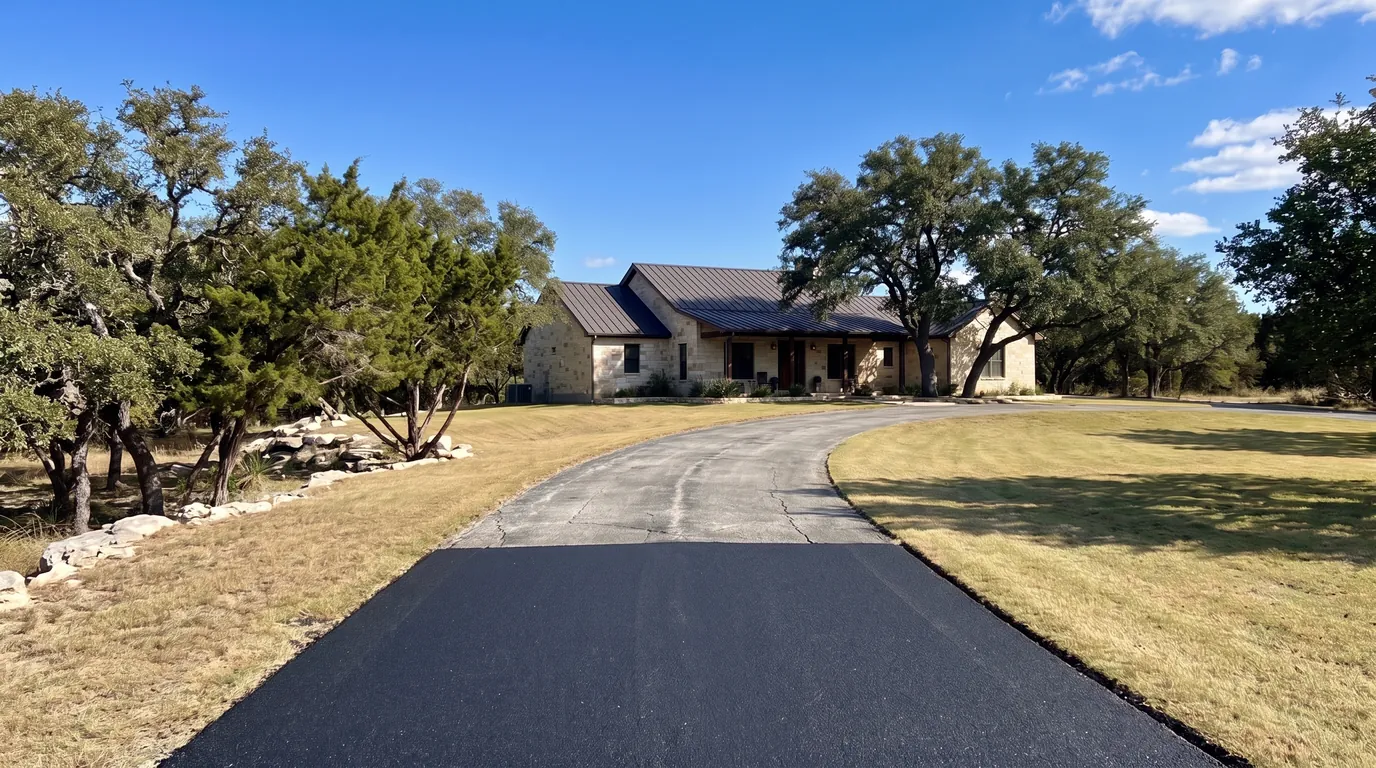
A driveway can look gray, faded, and cracked and still be a candidate for resurfacing. If the base underneath is sound, we can resurface it with an overlay. At the site visit, we look at how the cracks run and whether the driveway has sunk or heaved anywhere to decide if an overlay makes sense.
When an overlay makes sense
A driveway with a faded, rough surface, small cracks, some raveling (loose stone at the surface), and a few potholes may be a good candidate for an overlay. It still needs to hold its shape, with no big sunken areas or web-pattern cracking across large areas. If a few spots have failed, we can cut them out and patch them before laying the overlay.
Signs a driveway needs replacing
Web-pattern cracking (alligator cracking) across much of your driveway means the base has failed. Ruts, sunken areas, or water coming up through cracks after rain point to the same problem. An overlay over a failed base cracks in the same places within a few seasons, so in that case we tear out the old asphalt, fix the base, and repave as part of our new asphalt driveways work.
How we resurface a driveway
We clean the driveway surface, cut out and patch failed spots, and fill larger cracks. Then we spray a tack coat so the new asphalt layer bonds to the old surface.
Where the driveway meets the garage floor, the street, and walkways, we mill or cut back the edges. That lets the new layer meet those surfaces flush so water doesn’t run toward the garage. We lay the new asphalt with a paver and roll it while it’s hot.
What resurfacing costs
Angi’s asphalt driveway cost guide, updated April 2026, puts an asphalt overlay at $3 to $7 per square foot. Other published resurfacing figures vary between sources, and you can find them in the cost guide.