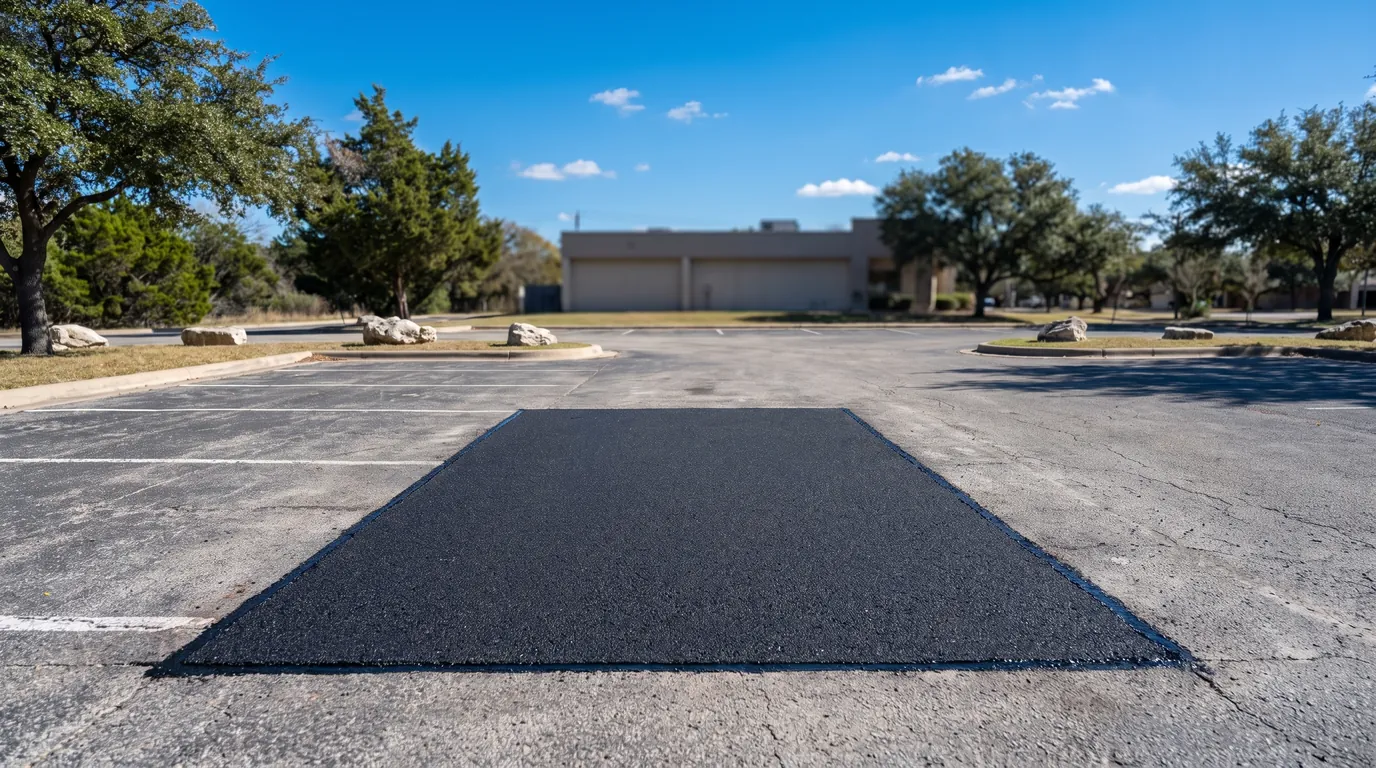
Potholes start when water gets through cracks into the base, and traffic breaks the weakened asphalt apart. A patch that only fills the hole comes back because the weakened base is still there. We repair the base under the hole as well as the surface.
Potholes and failed patches
We saw-cut a square or rectangle around the damage, extending a little into sound asphalt. Then we dig out the broken asphalt and any wet or soft base, add base rock, and compact it.
We apply tack coat to the cut edges, fill the opening with hot-mix asphalt, and roll the patch flush with the surrounding surface. The straight cut edges hold the patch in place and keep water out.
Cracks
We clean out single cracks and fill them with hot-applied crack sealant as part of our crack sealing and sealcoating work. Web-pattern cracking, also called alligator cracking, means the base underneath has failed, so we cut out that area and patch it.
Sunken spots, broken edges, and utility cuts
We cut out sunken spots and ruts, rebuild the base, and repave them. Along lawns and ditches, we cut back broken or crumbling edges, build up the base, and pave and compact a new edge. We patch trenches cut for water, sewer, or electric lines to match the surrounding surface.
Repair or resurface
When patches would cover a large share of the surface, driveway resurfacing with an overlay can make more sense than patch after patch. The same goes when the whole surface is worn. At the site visit, we’ll tell you which way we’d go and why.
What repairs cost
HomeGuide’s asphalt repair cost guide, dated May 2025, puts filling potholes at $100 to $400 and hot-patch repairs at $2 to $5 per square foot. You can find other published repair figures in the cost guide.